
FREE CONSULTATIONS 24/7
301-589-9500


Can You Challenge a DRE’s Findings in a Maryland DUI Case?
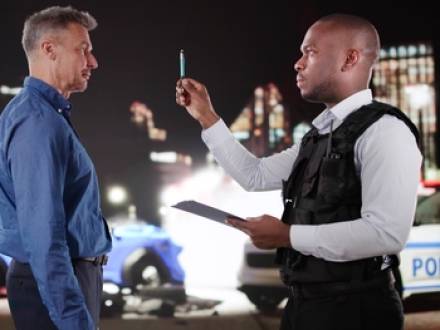 You can challenge a Drug Recognition Expert's findings in a Maryland DUI case, and doing so is often one of the most effective parts of a drug DUI defense. Drug Recognition Expert (DRE) evaluations are presented as scientific and reliable, but they have weaknesses that an experienced attorney can use. If a DRE's findings are being used against you in 2026, the Montgomery County, MD criminal defense lawyers at The Law Offices of Gerstenfield & Demirji, PC. can examine every part of that evaluation and fight to undermine it in court.
What Is a Drug Recognition Expert in a Maryland DUI Case?
A DRE is a law enforcement officer who has received special training to identify drivers who may be impaired by drugs rather than alcohol. When a breathalyzer does not explain a driver's behavior, or when an officer suspects drug use, a DRE may be called in to do a more detailed evaluation.
The DRE evaluation has several steps. These include:
-
Checking vital signs like pulse, blood pressure, and body temperature
-
Examining the eyes
-
Testing muscle tone
-
Looking for injection sites
-
Running divided attention tests
At the end, the DRE gives an opinion about whether the driver is impaired and what drug they think caused it. That opinion can then be used as evidence in court. It can sound very convincing to a jury, but it is far from bulletproof.
How Reliable Are DRE Evaluations in Drug DUI Cases?
DRE evaluations are presented as a standardized scientific process, but the findings are largely based on the officer's own observations and judgment. Some independent research has questioned how accurately DRE evaluations identify specific categories of drugs or distinguish impairment from other medical conditions.
In Maryland, DRE testimony has been used in DUI cases, but that does not mean it cannot be challenged. Courts look at expert testimony closely, and a skilled defense attorney can cast doubt on the reliability of a DRE's conclusions.
What Are the Most Common Ways to Challenge DRE Evidence in Maryland?
There are several effective ways to challenge a DRE evaluation. Your attorney will look at every part of the process to find the strongest arguments for your case.
Was the DRE Properly Trained and Certified?
A DRE must complete a specific training program and keep their certification current. If the officer who evaluated you did not complete the required training, had an expired certification, or did not follow the proper protocols, that goes directly to their credibility. Your attorney can request all training and certification records and look closely for any gaps.
Did the Officer Follow All the Steps of the DRE Protocol?
The DRE protocol is designed to be followed in a specific order. Deviations from that protocol may raise questions about the reliability of the officer's conclusions.
If the officer skipped steps, performed them out of order, or failed to document the evaluation properly, your attorney may be able to use those errors to challenge the DRE's conclusions. In some cases, those problems may also affect whether some or all of the testimony is admissible.
Were There Other Explanations for What the DRE Observed?
Many of the signs a DRE looks for during an evaluation can be caused by things other than drug use. Elevated pulse and blood pressure can result from anxiety or medical conditions. Constricted or dilated pupils can be affected by lighting or medications. Muscle stiffness can have neurological causes. Your attorney can present evidence showing that what the DRE observed had an innocent explanation that had nothing to do with drugs.
Do the Toxicology Results Actually Prove Impairment?
A DRE evaluation is usually followed by a blood or urine test to look for drugs. But finding a drug in someone's system does not automatically prove they were impaired while driving. Many substances stay detectable in the body long after their effects have worn off. Some prescription medications and cannabis metabolites, for example, may remain detectable well after any impairing effects have ended. Your attorney can challenge whether the toxicology results show impairment at the time of driving or simply that a substance was present.
What Maryland Law Applies to Drug DUI Charges?
In Maryland, drug DUI charges are prosecuted under Maryland Transportation Article Section 21-902. This law makes it illegal to drive while impaired by any drug or combination of drugs. Unlike with alcohol, there is no standard numerical threshold. The prosecution has to show the driver was impaired enough that it affected their ability to drive safely.
This standard gives DRE testimony a big role in these cases. But it also means the prosecution's case depends heavily on the DRE's subjective opinion, which is exactly what your attorney can go after.
Schedule a Free Consultation With Our Silver Spring DUI Defense Attorneys
Our Montgomery County, MD criminal defense lawyers handle every case with warmth and compassion because we know how much is at stake for you and your family. We have built strong relationships with prosecutors in the area. When the situation calls for it, we fight hard and do not back down. Contact The Law Offices of Gerstenfield & Demirji, PC. at 301-589-9500 to discuss your case. We are available 24/7.
نتكلم العربية. Hablamos español.








For a free consultation, call 301-589-9500 or fill out the form below:
The Law Offices of Gerstenfield & Demirji, PC.
8720 Georgia Ave., Suite 301
Silver Spring, Maryland 20910
301-589-9500



