
FREE CONSULTATIONS 24/7
301-589-9500


How Accurate Are Field Sobriety Tests?
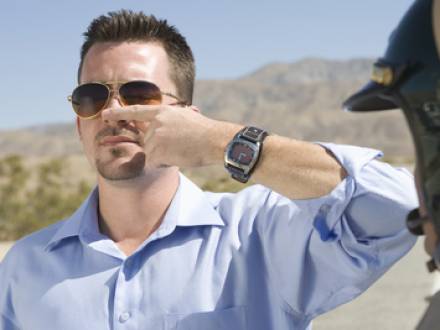 Maryland law enforcement uses standardized field sobriety tests during DUI investigations. They are not perfectly accurate and are affected by many factors unrelated to alcohol or drugs. Officers use them to make decisions, but the tests are not scientific proof of impairment. They are often administered quickly, late at night, and under pressure. A Montgomery County, MD DUI defense lawyer can help explain what these tests are meant to show and how much weight they actually carry.
What Are Field Sobriety Tests and Why Are They Used?
Field sobriety tests are physical and mental exercises given during a traffic stop. They are not required by Maryland law, but they are commonly used. Officers use them to observe balance, coordination, and the ability to follow instructions. They are meant to help an officer decide whether there is probable cause to make an arrest.
The most common standardized field sobriety tests include:
- Walk-and-turn test: Taking a set number of heel-to-toe steps while following specific instructions
- One-leg stand test: Standing on one foot while counting aloud for a short period
- Horizontal gaze nystagmus test: Watching the eyes for involuntary movement as they follow an object
- Balance and coordination tasks: Observing posture, stability, and divided attention
Each test requires the driver to understand instructions and perform under pressure.
How Accurate Are Field Sobriety Tests in Practice?
Field sobriety tests are not foolproof. Even when a driver follows instructions carefully, the results can still be inaccurate. Many factors unrelated to alcohol or drugs can affect performance, and officers must rely on visual cues and personal judgment, which can vary. These tests are intended to support an officer’s observations during a stop, but they do not replace chemical testing.
What Factors Can Affect Field Sobriety Test Results?
Many conditions can cause a person to struggle with field sobriety tests, even when sober. Common factors that may affect performance include:
- Uneven pavement, poor lighting, or bad weather
- Nervousness, anxiety, or stress during the stop
- Age, weight, or physical injuries
- Medical conditions affecting balance or coordination
- Fatigue or lack of sleep
Because field sobriety tests are based on observation, the results can be questioned in a DUI case. A lawyer may review how the tests were given and whether the conditions were fair. This can help show that the results are not always reliable on their own.
Are Field Sobriety Tests Required Under Maryland Law?
Maryland law does not require drivers to perform field sobriety tests. Maryland DUI charges are governed by Maryland Transportation Article § 21-902, which addresses driving while impaired or under the influence. This law does not mandate roadside testing.
Drivers may decline field sobriety tests. However, refusing may still influence an officer’s decision to arrest based on other observations.
How Do Courts View Field Sobriety Tests in Maryland?
Courts understand that field sobriety tests are subjective. They are usually presented as one piece of evidence, not definitive proof. Judges and juries may consider how the tests were given, whether instructions were clear, and whether conditions were appropriate. Video evidence from dash or body cameras can also be relevant. Improper administration or unclear instructions can reduce the weight given to these tests.
Are Field Sobriety Tests the Same as Breath or Blood Tests?
Field sobriety tests are different from chemical tests, which measure the amount of alcohol in a person’s body. In Maryland, breath and blood testing are governed by Maryland Transportation Article § 16-205.1, the implied consent law that explains what happens if someone refuses testing after an arrest.
If you refuse chemical testing, Maryland law allows the Motor Vehicle Administration to impose an administrative license suspension. An officer may take your driver’s license at the time of arrest and give you a temporary paper license. However, you may have the right to request a hearing to challenge the suspension.
Schedule a Free Consultation With a Silver Spring, MD DUI Defense Attorney
At The Law Offices of Gerstenfield & Demirji, PC., clients receive guidance with warmth and compassion, along with strong advocacy when it matters. We maintain good working relationships with prosecutors while remaining aggressive when necessary. If you have questions after a DUI stop, contact our Montgomery County, MD DUI defense lawyer at our firm. Call 301-589-9500 to discuss your situation and options. Our team is fluent in Arabic and Spanish, and we are available 24 hours a day, seven days a week.








For a free consultation, call 301-589-9500 or fill out the form below:
The Law Offices of Gerstenfield & Demirji, PC.
8720 Georgia Ave., Suite 301
Silver Spring, Maryland 20910
301-589-9500



